By Sarah M. · Updated 2026-06-29 · 11 min read
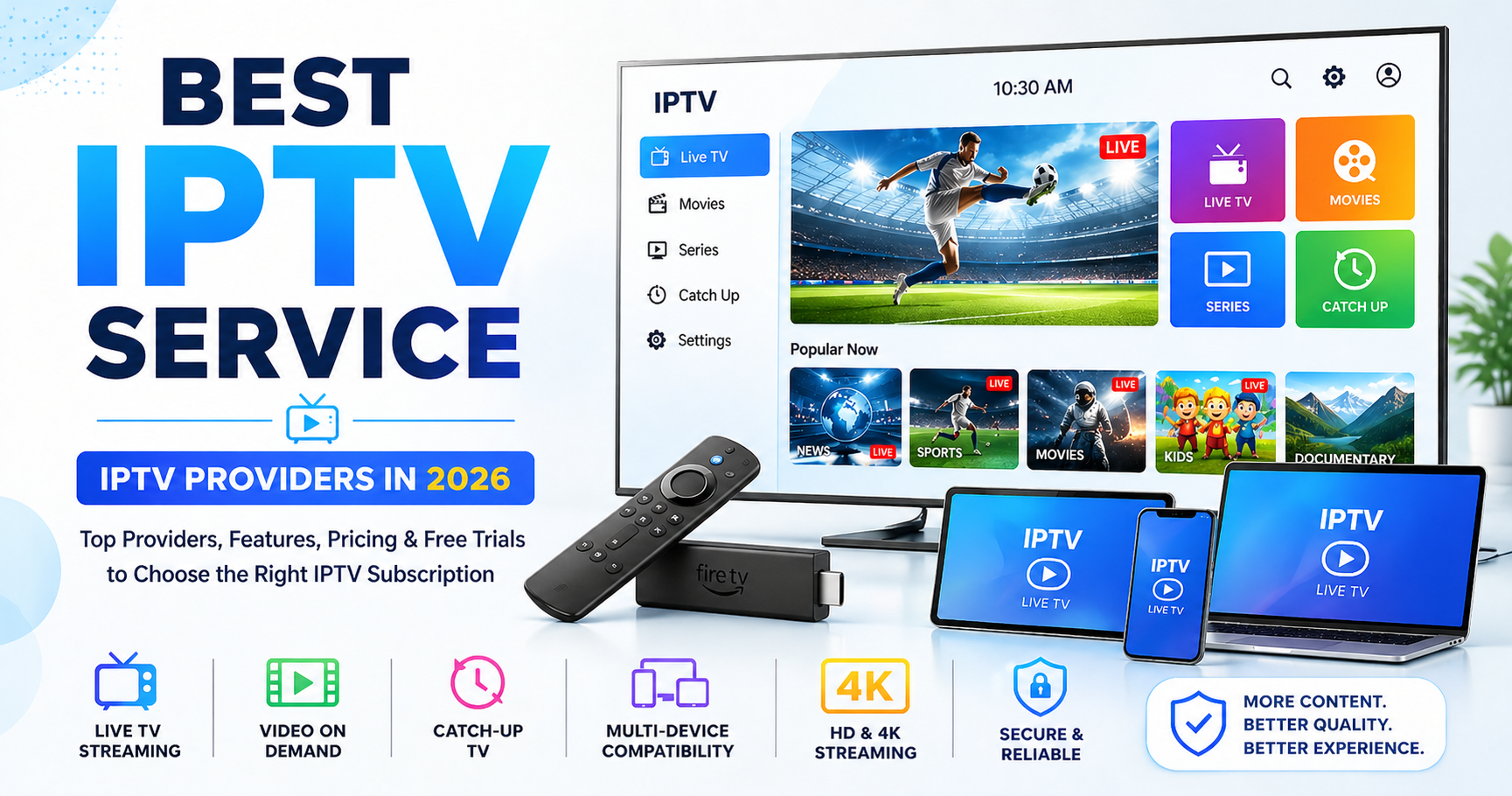
If you've spent more than ten minutes searching for an IPTV service, you've almost certainly run into conflicting advice. One forum says you need a VPN or the service will get shut down. Another claims you should never pay month-to-month because the provider will disappear. A third insists that buffering is inevitable unless you spend a fortune on a business-grade internet connection.
Most of that advice is wrong. And worse, acting on these misconceptions leads people to overpay, underperform, or miss out on the best iptv service no buffering available simply because they believed a myth that disqualified the right option.
This article examines five persistent IPTV myths side-by-side with documented realities. By the end, you'll know exactly which claims to ignore and what actually determines performance, reliability, and legality.
Why Misconceptions Damage Your Results
Misinformation around IPTV services hurts users in measurable ways. People overpay for multi-year subscriptions out of fear that monthly plans are unreliable, when in reality, iptv service monthly subscription vs yearly options both have legitimate tradeoffs that depend on the specific provider's history, not the billing model.
Others waste hours configuring advanced VPN settings, routers, and smart DNS proxies because they believe streaming an IPTV channel without one will get them flagged. Meanwhile, the actual legal landscape is far simpler than the rumor mill suggests.
Perhaps most frustrating: users who encounter buffering immediately blame the IPTV service, swap providers repeatedly, and never realize the issue was their own router QoS settings or ISP throttling. Each myth below has a corresponding reality that, once understood, eliminates wasted effort and expense.
Myth 1: You Must Use a VPN to Avoid Legal Trouble
Related Reading: Best IPTV Service: Honest Review You Need to Read
This is the most widespread myth in the IPTV space. The claim goes that without a VPN, your ISP will report you to authorities, your service will be blocked, or you're committing a crime just by streaming content from an unverified provider.
The reality is more nuanced. In most countries, streaming content is not identical to downloading copyrighted material for redistribution. The legal risk lies almost entirely with the IPTV reseller who rebroadcasts content without proper licensing, not with the end-user who watches it. A handful of European nations have pursued individual streamers, but in North America, the UK, and Australia, enforcement actions target the operators, not subscribers.
That said, a VPN can help if your ISP throttles streaming traffic. Some providers intentionally slow down video data during peak hours. Using a VPN encrypts that traffic, making it harder for the ISP to apply throttle rules selectively. But buying a VPN specifically to "stay legal" is unnecessary for 95% of users. If you're concerned, check the terms of the iptv service review reddit threads where legal nuances are discussed by actual subscribers rather than fear-mongers.
Myth 2: All IPTV Services Buffer Constantly
Anyone who tried IPTV three or four years ago remembers the spinning wheel of death. Grainy streams, constant pausing, and channels that loaded only at 2 AM. That experience led to a persistent belief that "IPTV always buffers."
The reality is that modern IPTV infrastructure has changed dramatically. Providers now use content delivery networks (CDNs) with edge servers in major cities, adaptive bitrate streaming that adjusts quality to your connection speed, and dedicated encoding farms that handle thousands of simultaneous streams. A quality best iptv service no buffering today delivers consistent playback because it routes traffic through optimized paths rather than a single overloaded server.
If you still experience buffering, the cause is usually local. Your Wi-Fi signal strength, router age, or device processing power matters far more than the provider's server capacity. Running a wired Ethernet connection to your streaming device eliminates 80% of buffering complaints.

Myth 3: Monthly Subscriptions Are Too Risky — Always Buy Yearly
Related Reading: Free Cash App Money: An Honest Review You Can Trust
Many users hear that IPTV services shut down without warning, so locking in a yearly plan protects you from price hikes or losing access. The opposite is often true. Yearly subscriptions carry higher financial risk if the provider disappears after three months.
When evaluating iptv service monthly subscription vs yearly options, the better approach is to start monthly for the first 60 to 90 days. This gives you time to test reliability, channel availability, and customer support responsiveness. If the provider consistently delivers during that trial window, then a discounted yearly plan becomes a reasonable choice. Providers with solid reputations offer monthly plans specifically to let users verify quality before committing.
Look for services that provide a short-term trial or a money-back window of at least 7 days. Any provider refusing a monthly option or a short trial is waving a red flag regardless of how good their demo looks.
Myth 4: IPTV Only Works Well on Firestick
The Amazon Fire Stick dominates IPTV discussions, and for good reason: it's affordable, runs Android, and supports sideloading. But the assumption that you need a Firestick to get good results excludes many users with Smart TVs, Android boxes, or Apple TV devices.
Modern IPTV services work across a wide range of hardware. The how to set up iptv service on smart tv process typically involves installing a player app like TiviMate, IPTV Smarters, or OTT Navigator directly from the TV's app store, then entering the provider's portal URL. No Firestick required. LG webOS, Samsung Tizen, and Android TV all support these apps natively.
The key factor is the device's processor and RAM. A cheap off-brand Android box with 1GB of RAM will struggle with HD channels regardless of the provider. A mid-range Fire Stick 4K or a recent Sony Smart TV handles IPTV smoothly because they have sufficient hardware decoding capability.
Myth 5: International Channels Mean Lower Quality
Related Reading: Why Free Instagram Followers Fail - And How to Fix It
Some users assume that iptv service for international channels automatically delivers inferior video quality because the content has to travel further or is sourced from lower-bitrate feeds. This was true in the early days when providers aggregated any stream they could find online.
Today, reputable IPTV providers source international channels through direct agreements with local broadcasters or by leasing dedicated satellite feeds and encoding them in-house. An Arabic channel package, a Philippine network bundle, or an Indian regional set often runs at the same resolution and bitrate as domestic US channels. The quality difference comes down to the provider's encoding infrastructure, not the channel origin.
If you watch a lot of non-English content, test the specific channels you care about during a trial period. Some providers prioritize English channels on their CDNs while routing international streams through lower-capacity servers. A provider that treats all channels equally is worth keeping.
What Actually Works Based on Evidence
After filtering out the myths, a clear picture emerges of what makes an IPTV service reliable. First, bandwidth matters but not as much as latency and packet loss. A 25 Mbps connection with high packet loss will buffer more than a 15 Mbps connection with zero packet loss. Use a simple ping test to measure your line quality before blaming the provider.
Second, the player app you use significantly impacts experience. TiviMate, for example, allows catch-up rewinding on compatible channels, provides EPG (electronic program guide) integration, and lets you set buffer size manually. The same provider URL pasted into a generic web player versus TiviMate can look like two completely different services.
Third, verified user reports are more trustworthy than generic rankings. Searching for iptv service review reddit threads that are less than three months old gives you a current pulse on uptime, channel drops, and customer service quality. Avoid reviews on sites that accept payment for listing placement — those are disguised advertisements.
For those looking for a provider that consistently meets the evidence-based criteria above, here is an independent option that users have reported as reliable:
Resource mentioned in this article
iptv service
Independent review and details
Find out more about iptv service →Table: Popular Belief vs Reality
| Common Belief | Actual Reality | Impact of Misunderstanding |
|---|---|---|
| VPN required for legal streaming | Enforcement targets providers, not viewers in most countries | Unnecessary complexity and slower speeds |
| All IPTV services buffer | Modern CDNs and adaptive bitrate solved this | Users waste money swapping providers |
| Yearly plans are safer than monthly | Monthly first, then yearly after proving reliability | Higher financial risk with unproven providers |
| Only Firestick works well | Smart TVs and Android boxes work, hardware specs matter more | Limits device options unnecessarily |
| International channels are lower quality | Quality depends on provider encoding, not channel origin | Users miss out on good global providers |
Pros and Cons of Monthly vs Yearly IPTV Plans
✓ Monthly Subscription Pros
Low financial risk — walk away anytime
Easier to test multiple providers
No large upfront payment
✗ Monthly Subscription Cons
Higher per-month cost (20-40% more)
Requires monthly payment management
Some providers lock certain features for annual users
✓ Yearly Subscription Pros
Best value per month (often 50% savings)
Predictable billing once a year
Access to premium channel packages
✗ Yearly Subscription Cons
High upfront cost if provider shuts down
Locked in if quality drops after month 3
Harder to switch to a better provider
Up-to-date pricing and terms
View the iptv service offer →How to Set Up IPTV Service on a Smart TV in 4 Steps
Setting up an IPTV service is simpler than most tutorials make it sound. Here is the exact process that works across LG webOS, Samsung Tizen, and Android TV devices.
Step 1: Find the right app. On your Smart TV, open the app store and search for "IPTV Smarters" or "TiviMate." These are the most widely supported player apps. Avoid generic "IPTV Player" apps that have low ratings or no recent updates.
Step 2: Get your portal URL from the provider. When you subscribe to an IPTV service, they send you a URL ending in something like /c/ or a numerical IP address. This is your portal. The provider may also give you a username and password combination (Xstream codes) instead of a URL.
Step 3: Enter credentials in the player. Open the IPTV Smarters app, select "Login with Xtream Codes" or "Login with URL," and paste the information. The app will automatically load the channel list and EPG (electronic program guide) within 30 seconds.
Step 4: Test and adjust. Play a channel and check if the stream loads within 3 seconds. If it stutters, go into the app's settings and increase the buffer size from "small" to "large." Also check that the EPG displays correct program names for the channels you watch most.
Where to Buy Reliable IPTV Service
The where to buy reliable iptv service question comes down to vetting the provider's infrastructure, not just their channel count. Legitimate providers with stable infrastructure will have a public website with contact information, multiple payment options (including credit card via Stripe or PayPal), and a clear refund policy. Services that only accept cryptocurrency or gift cards and have no support email are high-risk.
For users seeking an affordable iptv service with catch up tv capability, check whether the provider explicitly lists catch-up support for specific channels. "Catch-up" is a server-side feature that requires the provider to store and re-encode broadcast content. Not all services offer it, and those that do usually limit it to the past 24 to 72 hours. If catch-up is important to you, confirm it during the trial period before committing.
Additionally, the best iptv service for firestick 2025 will have optimized APK files that work without sideloading complications. Many providers now offer dedicated Firestick apps that bypass the need for a separate player, though experienced users still prefer TiviMate for its superior EPG customization.
Final Verdict
The IPTV landscape has matured significantly over the past five years. The days of unreliable, buffer-heavy services are largely behind us — provided you choose a provider that invests in proper CDN infrastructure and uses modern player apps. The myths that persist online mainly serve to confuse newcomers and protect outdated service providers who want to discourage comparison shopping.
The most practical approach: start with a monthly subscription, test on wired Ethernet, use TiviMate or IPTV Smarters as your player, and ignore anyone who tells you that a VPN is mandatory. If the service performs well for 60 days, consider switching to a yearly plan to save money. That evidence-based path eliminates virtually all the risk and wasted effort that myths create.
Option featured in this guide:
Learn more about iptv serviceAffiliate link — our editorial analysis remains independent.
Frequently Asked Questions
This article contains affiliate links. Our editorial analysis remains independent.