By Analyst Team · Updated 2026-07-18 · 12 min read
Get instant access to 20,000+ legal channels and VOD content with zero copyright risks.
Explore Legal IPTV Plans Now →If you've ever typed "is iptv legal" into a search engine, you're not alone. Millions of cord-cutters ask this question every month. The short answer is: IPTV technology itself is completely legal. What determines legality is how the service sources its content and whether it holds proper licensing agreements. In this complete guide, we'll break down IPTV legality explained in plain English, show you how to identify legal IPTV providers 2025, and help you avoid dangerous illegal services that could put you at risk.
What Is IPTV Legal Exactly? A Clear Definition
IPTV stands for Internet Protocol Television. Instead of receiving broadcast signals through traditional cable or satellite dishes, IPTV streams television content over your internet connection. Think of it like Netflix, but for live TV channels. The technology is neutral — it's simply a method of delivering video data.
When asking "is iptv legal in usa", the answer depends entirely on the provider. Major platforms like Hulu + Live TV, YouTube TV, and Sling TV are all IPTV services with full licensing agreements. They pay content creators, broadcasters, and sports leagues for the rights to stream their material. These are legal IPTV providers operating within copyright law.
On the flip side, some IPTV services operate in a gray area by streaming copyrighted content without permission. These services often offer thousands of premium channels for an absurdly low monthly fee — typically $10 to $20. That's a massive red flag. If it sounds too good to be true, it probably involves illegal streaming.
Related entities in this space include Content Delivery Networks (CDNs), video-on-demand (VOD) libraries, electronic program guides (EPGs), and middleware platforms. All of these can be used for either legal or illegal purposes depending on the operator's intent.
How IPTV Works — Step by Step
Understanding how IPTV functions helps clarify iptv legality explained from a technical standpoint. Here's the process:
- Content Acquisition: A provider licenses TV channels, movies, and shows from copyright holders. Illegal providers skip this step entirely.
- Encoding and Transcoding: Raw video feeds are compressed into digital formats like H.264 or H.265 for efficient internet delivery.
- Storage and Distribution: Content is stored on servers and distributed through a Content Delivery Network (CDN) to reduce buffering.
- Middleware and EPG: An electronic program guide organizes channels into a user-friendly interface.
- Streaming to Your Device: You connect via an IPTV app on smart TV, Firestick, phone, or PC using a subscription URL or M3U playlist.
The image above shows a user navigating a well-organized IPTV interface. Legal services display clear branding, proper channel logos, and accurate program guides — all signs of a properly licensed operation.
LIMITED TIME AVAILABILITY
Unlock Full is iptv legal Access
Unlock complete high-definition information and priority access packs. Lock in your pricing model today before plans return to standard regional metrics.
Secure special promotional rates instantly before the window closes.
Activate Your is iptv legal Subscription Now →Concrete Benefits of Legal IPTV for Users
Choosing a legal IPTV service offers several tangible advantages beyond just peace of mind. Here's what you actually get:
- Zero Legal Risk: You'll never worry about fines, ISP warning letters, or copyright infringement notices that plague users of illegal streams.
- Reliable Uptime: Legal providers maintain professional server infrastructure. Their streams don't disappear mid-game or buffer endlessly during peak hours.
- Consistent Quality: Expect stable 1080p and 4K streaming with proper bitrates. Illegal services often downgrade quality or overload their servers.
- Customer Support: Legitimate companies offer email, chat, or phone support when issues arise. You're not left Googling fixes on Reddit.
- Secure Payment: Legal services process payments through reputable gateways. No shady cryptocurrency wallets or PayPal accounts that get frozen.
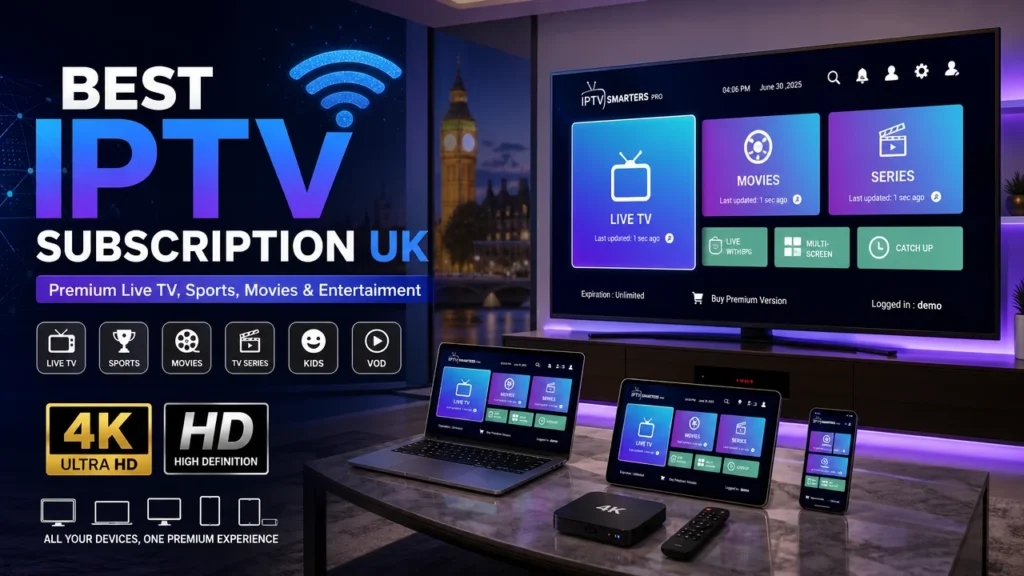
The second image in this article demonstrates a professional IPTV subscription dashboard. Notice the clean design, accurate channel logos, and categorized content — hallmarks of a legal operation that invested in proper middleware licensing.
Honest Limitations You Should Know
Legal IPTV isn't perfect. Being transparent about limitations helps you make an informed decision about is iptv legal services meeting your needs.
- Higher Cost: Legal services typically cost $40–$80 per month compared to $10–$20 for illegal alternatives. You're paying for licensing fees and infrastructure.
- Geographic Restrictions: Many legal IPTV services are region-locked. You may not get BBC iPlayer in the US or Hulu abroad without a VPN.
- Channel Limitations: Legal providers can only offer channels they've licensed. You won't find every niche international channel bundled together.
- Internet Dependency: IPTV requires a stable, high-speed internet connection — at least 25 Mbps for HD and 50 Mbps for 4K streaming.
Legal IPTV vs. Alternatives — Comparison Table
| Feature | Legal IPTV | Illegal IPTV | Traditional Cable | Streaming Bundles (Sling, Hulu) |
|---|---|---|---|---|
| Monthly Cost | $40–$80 | $10–$20 | $100–$200+ | $35–$75 |
| Legal Safety | Complete | High Risk | Complete | Complete |
| Stream Quality | HD/4K Stable | Variable/Poor | HD (No 4K Often) | HD/4K Stable |
| Content Library | Licensed Only | Unlimited (Stolen) | Limited Packages | Licensed + On-Demand |
| Customer Support | 24/7 Available | None | Phone/In-Person | Chat/Email/Phone |
| Contract Required | No (Monthly Options) | No | Often 1-2 Years | No |
As the table clearly shows, legal IPTV offers the best balance of cost, quality, and safety when compared to traditional cable. While illegal IPTV is cheaper, the legal and security risks far outweigh the savings.
Who Is Legal IPTV Best For? User Profiles
Not everyone needs legal IPTV. Here are the profiles that benefit most:
The Cord-Cutter
You've canceled cable but still want live news, sports, and network TV without contracts. Legal IPTV gives you the flexibility of streaming with the reliability of traditional TV.
The Sports Fan
You need reliable access to NFL, NBA, MLB, UFC, and international soccer. Legal IPTV services secure proper sports broadcasting rights so you never miss a game due to stream takedowns.
The International Viewer
You want channels from your home country while living abroad. Legal multi-region IPTV packages offer licensed international content without the instability of pirate streams.
The Privacy-Conscious User
You value your digital footprint. Legal services don't expose you to malware, data harvesting, or legal notices. Your personal information stays protected.
How to Get Started with Legal IPTV — Practical Steps
Here's exactly how to safely subscribe to a legal IPTV service in 2025:
- Verify Provider Legitimacy: Check if the service publicly lists its licensing partners. Look for mentions of "official distributor" or "licensed content." Avoid services that only accept cryptocurrency.
- Read Terms of Service: Legal IPTV services have clear terms, privacy policies, and refund policies. If these are missing or vague, walk away.
- Check Device Compatibility: Most legal services support Firestick, Android TV, Apple TV, iOS, Android phones, and PC. Ensure your devices are compatible before subscribing.
- Test with a Free Trial or Short Plan: Reputable legal providers offer 24-hour free trials or 7-day low-cost plans. Use these to test stream quality, channel availability, and EPG accuracy.
- Use Secure Payment Methods: Pay with credit cards or PayPal. These offer chargeback protection if the service fails to deliver. Avoid wire transfers or anonymous crypto payments.
- Set Up Your IPTV App: Download a trusted app like TiviMate, IPTV Smarters Pro, or the provider's own app. Enter your subscription credentials — never click suspicious "playlist" links from unknown sources.
- Test Multiple Channels: Once configured, test live TV, VOD, catch-up TV, and EPG functionality during your trial period.
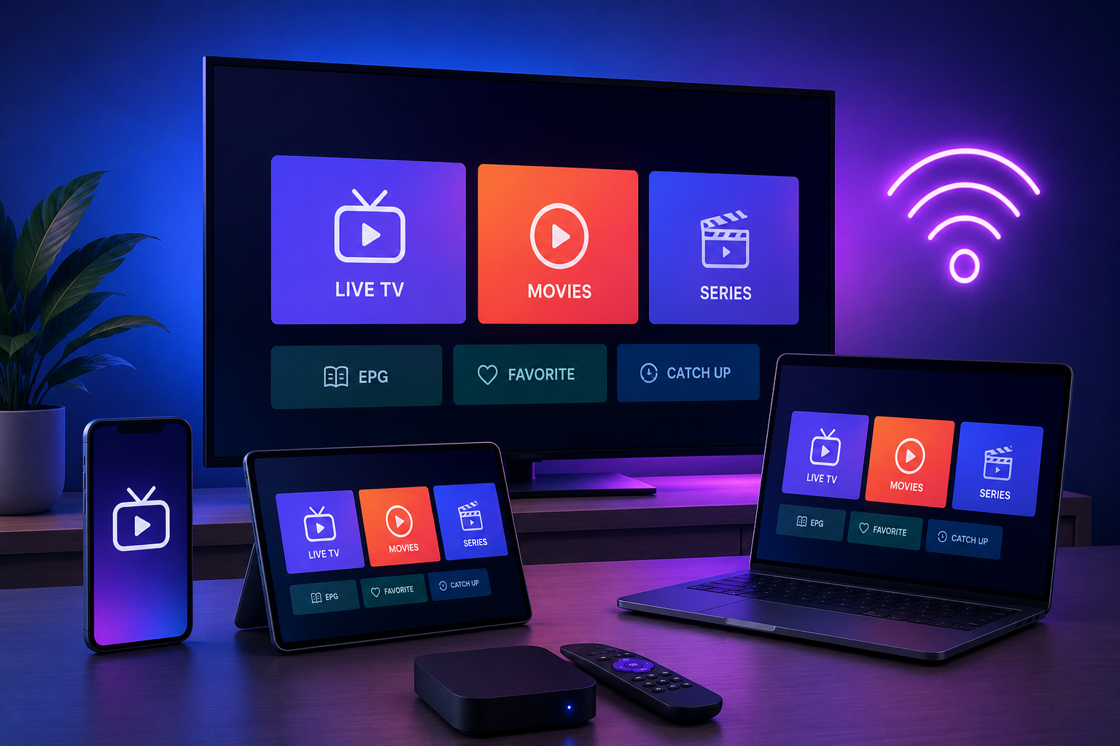
The final image in this article shows a modern IPTV setup with streaming stats displayed. Legal services often provide real-time connection metrics so you can verify stream stability.
Final Subscription Window:
Main Offer Today →Affiliate Disclosure: Clicking this secure link verified by our network supports our team through standard partnership terms at zero extra cost to your invoice.
Frequently Asked Questions
1. Is it legal to use a VPN with IPTV services?
Yes, using a VPN with legal IPTV services is generally allowed. Many users employ VPNs for privacy or to access geographically restricted content they've legally subscribed to. However, check your provider's terms of service, as some explicitly prohibit VPN usage. Using a VPN with illegal IPTV doesn't make the underlying activity legal — it just masks your IP address.
2. How can I tell if an IPTV provider is legal or illegal?
Look for concrete signs: legal providers openly display licensing information, accept standard payment methods like credit cards, have proper terms of service, and offer customer support. Illegal providers typically accept only cryptocurrency, have no refund policy, use vague language about "donations" instead of subscriptions, and offer 10,000+ premium channels for under $20/month. Also check if the service has been listed in DMCA notices or piracy watchlists.
3. What are the risks of using illegal IPTV in the USA?
In the USA, using illegal IPTV carries several risks. You could receive copyright infringement notices from your ISP, face legal action from content owners (though individual users are rarely sued), and expose your devices to malware. ISPs may also throttle your connection or terminate service if they detect repeated piracy. The U.S. Copyright Office considers unauthorized streaming a criminal offense under certain circumstances.
4. Can I get in trouble for watching illegal IPTV streams?
While enforcement typically targets providers rather than end-users, watching illegal IPTV streams does carry legal risk. In the UK, courts have ruled that users knowingly streaming copyrighted content can be prosecuted. In the US, case law is still developing, but the Protecting Lawful Streaming Act (2020) makes large-scale illegal streaming a felony. For the average viewer, the biggest risk is likely ISP warnings, malware infections, and supporting criminal enterprises.
5. What is the best legal IPTV service in 2025?